

Among car fans, e-cars are still considered boring. However, the technology has many advantages that should also convince real petrolheads.
Even traditional brands such as Mercedes-AMG, Maserati or Dodge, whose sports models have so far drawn their power primarily from a generous displacement, will rely on the enormous torque of electric motors in the future.
Regardless of whether the carmakers have voluntarily decided to abandon classic engine construction and rely on this technology, the electric car has long since shed its conservative eco-image and has some advantages. Here are ten arguments that should make it easier for even the most hardened petrolheads to switch to an electric car.
Electric cars offer XXL driving pleasure
Since battery-electric vehicles (BEVs) do not require a transmission, the power development takes place linearly and without disturbing switching interruptions. Sure, the engine sound conveys a lot of emotion, but the constant and sometimes brute power development thanks to the massive torque should make up for it.
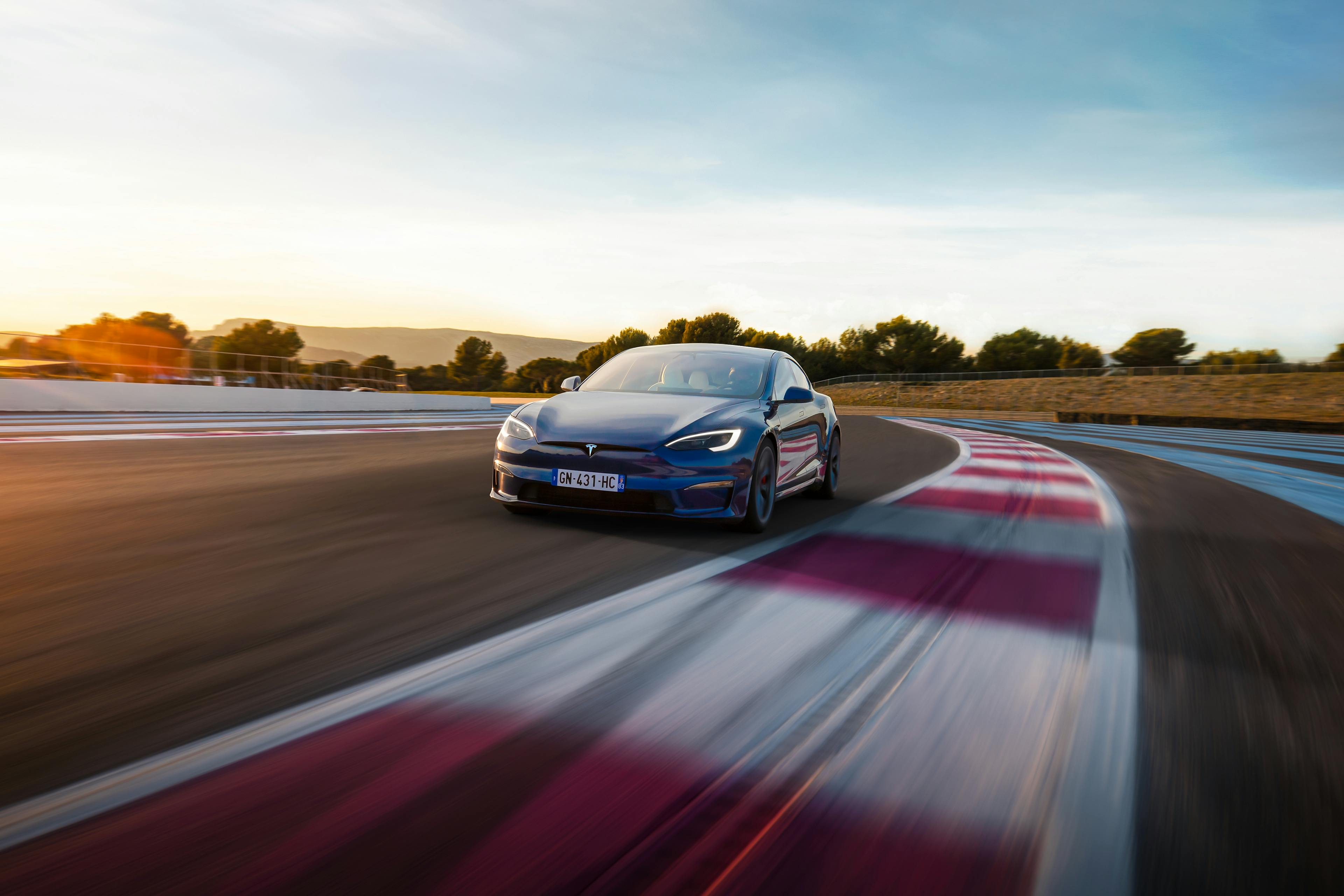
Tesla's 1,020 hp Model S Plaid, for example, accelerates from zero to one hundred in a breathtaking 2.1 seconds. However, the record for the most powerful electric car is held by the Rimac Nevera. The Croatian hypercar manages to beat the two-second mark by a tenth thanks to its 1,914 hp.
Incidentally, the widespread opinion that e-cars are only fast in a straight line is nothing more than a prejudice. On paper, many electric cars have a handicap compared to comparable combustion engines due to their heavy battery, but if the batteries have been placed in the right place, they can also be an advantage.
Since the power storage units are usually located centrally between the two axles, many electric cars have a low center of gravity, which ensures balanced handling. In addition, they often have rear-wheel drive and therefore no drive influences can be felt in the steering. Would you like an example? The Porsche Taycan Turbo S production electric car sprints around the Nordschleife in 7:33 minutes. Tesla was not able to break Porsche's record from August 2022 until the beginning of June. A Model S Plaid with a track package burned a lap time of 7:25 minutes into the asphalt in the Eifel. This made the Americans eight seconds faster than the Swabians.
E-cars improve air quality in cities
No exhaust, no local exhaust fumes – this is how the e-car contributes to air pollution control and thus also to health protection, especially in cities. Particulate matter and nitrogen oxides in particular can lead to a variety of respiratory diseases and other health problems. Even though modern combustion engines have become much cleaner, the e-car has a clear advantage in this respect:
- The pollutants released during the combustion of fuel not only buzz through the air, but also settle on house facades and windows.
- However, e-cars are not completely emission-free on the road: the abrasion of the tires, brakes and road surface also causes particulate matter in them.
- However, you have to give the electric cars credit for the fact that they produce significantly less brake abrasion than a combustion engine. Since the vehicles recover energy by means of recuperation when coasting, they use the classic braking system much less frequently.
Electric motors run much quieter than classic combustion engines
At low speeds, engine noise dominates in a combustion engine. Electric motors run much quieter in comparison. In theory, this leads to lower noise emissions, especially in residential areas and at intersections.
Compared to the current combustion engines, however, the difference in noise is not so significant: For safety reasons, new electric vehicles have had to have an AVAS system (Acoustic Vehicle Alerting System) for about two years. This acoustic warning signal for pedestrians and cyclists must be between 56 and 75 decibels loud and audible at speeds of up to 20 km/h and when reversing. Despite this mandatory safety feature, however, the electric cars are still quieter than many cars with reciprocating engines.
It is interesting to note that from 30 km/h onwards, the rolling noise of the tyres generates the most noise. When driving at high speeds, there is only a slight reduction in noise levels, despite the electrification of the car.
With the e-car, you can often get away cheaper in the long term
Who would have thought: With an electric car, you can often drive cheaper than with a comparable combustion engine, and this takes into account all financial aspects - from the current state subsidy to the costs for fuel or electricity, maintenance, repair and tire wear to vehicle tax and insurance premiums. This is the result of a cost comparison by the ADAC, in the preparation of which the experts assumed an annual mileage of 15,000 kilometers and a holding period of five years.
In the manufacturers' online configurators, there is usually a generous price difference between similarly equipped combustion engines and electric cars. This gap is widened by the fact that car manufacturers often give hefty discounts on the classically powered models. However, if you include the state subsidy, which is currently up to 6,750 euros (including the manufacturer's share), some electric models are already cheaper to purchase than their counterparts with combustion engines.
Here is a calculation example:
- The electric BMW i4 eDrive40 costs at least 59,800 euros, while the technically closely related combustion engine 430i Gran Coupé costs 56,900 euros.
- After deducting the subsidy of 4,500 euros, the electric car would therefore be 1,600 euros cheaper than its conventionally powered platform brother, at least if you assume pure list prices.
- If all costs are included, the electric version is also the cheaper one in the long term.
- According to ADAC figures, a kilometre with the i4 costs 79.9 cents, while the 430i with petrol engine costs 85.8 cents. The basis for both values is also the list price.
Another plus: The electric car driver also saves in other areas over the years. E-cars that were or will be registered between May 18, 2011 and December 31, 2025 are exempt from motor vehicle tax until the end of 2030. There is also potential for savings in insurance, as the tariffs for some electric models are comparatively cheap. Through the GHG quota (greenhouse gas reduction quota), owners of e-cars can even earn money on the side. Anyone who has registered with one of the many GHG providers and had the bonus approved will earn up to 475 euros per year, depending on the contract and mileage.
In the long run, the e-car also saves on these points:
- Charging current is usually cheaper than gasoline or diesel.
- If you have a photovoltaic system on the roof of your house and charge your vehicle's battery with solar power via a wallbox, you can get away with it quite a bit cheaper.
- Maintenance costs are lower because the electric drive eliminates the need for an oil change and the wear of the brakes is lower thanks to recuperation.
- Compared to a combustion engine with transmission, the hardware of a battery-electric drive is less complex. Therefore, the risk of cost-intensive repairs is significantly lower.
The batteries last forever
Many drivers are afraid that the traction battery will give up the ghost or lose a lot of capacity after a few years. Battery replacement costs money, for example in the Tesla Model S it costs just under 20,000 euros. However, this scenario occurs extremely rarely. And even if the battery is damaged, the entire battery does not necessarily have to be replaced. Some manufacturers sometimes only replace the damaged cells or battery modules.
- Most carmakers currently offer a warranty of eight years or 160,000 kilometers.
- Toyota is showing much more confidence in its in-house battery technology with its subsidiary brand Lexus. With the Japanese, the warranty covers ten years or one million kilometers.
- However, buyers of other brands do not have to worry that the range will melt away after the warranty period has expired.
- According to an analysis, Tesla Model S batteries still have an average of over 92 percent of their original capacity after 240,000 kilometers.
The efficiency of the electric drive is unbeatable
In terms of efficiency, the electric drive is vastly superior to all potential alternatives. In gasoline or diesel engines, a large part of the energy used is converted into waste heat and evaporates. The efficiency here is around 20 percent. If the combustion engines are powered by e-fuels, i.e. synthetic fuels based on hydrogen and CO2, it is only 10 to 15 percent. The reason: Huge amounts of green electricity are needed for production.
The efficiency of the electric car at a glance:
- In an electric car, on the other hand, between 80 and 90 percent of the original energy actually reaches the drive wheels.
- If the electricity is stored directly in the battery and used for the drive without energy-intensive conversion processes, the losses are logically much lower.
- With the same amount of energy that a diesel or gasoline engine fueled with synthetic fuels needs per 100 kilometers, a comparable electric car can travel over 500 kilometers.
Please note: Only when the electricity demand is covered exclusively by renewable energies can the alternative drives be described as climate-neutral. Since green electricity is not yet available in abundance, the top priority until then must be efficiency. And in this discipline, the electric drive is simply unbeatable. The other options at this point in time would be a waste of energy.
E-technology is getting better and better
Compared to the combustion engine, the electric drive still offers massive potential for improvement. Massive investments were made in the reciprocating engine over a century and a half to make it as efficient, smooth and powerful as it is today. Although there is still some room for improvement, the electric drive, on the other hand, is comparatively only at the beginning of its development.
The Model S, the first electric large-scale model of the modern era, is an example of how much has happened technologically in the past ten years. When it was introduced in 2012, the sedan with the largest battery in reality could travel about 400 kilometers on a single battery charge, while the current Model S can travel up to 652 kilometers. In the meantime, however, traditional car manufacturers have also caught up. Mercedes specifies a WLTP range of 780 kilometres for the EQS 450+.
Lucid, the company of former Tesla chief engineer Peter Rawlinson, has an electric sedan on offer with the Air, which is supposed to travel up to 883 kilometers with a full battery according to the WLTP standard. But not only have the ranges improved, but at the same time the electric motors have also become more powerful and efficient.
This is what the current benchmark in charging technology looks like:
- Innovations such as the 800-volt on-board electrical system ensure a reduced charging time.
- The Lucid Air has a charging capacity of 350 kW and can thus draw enough electricity for 500 kilometers within 20 minutes.
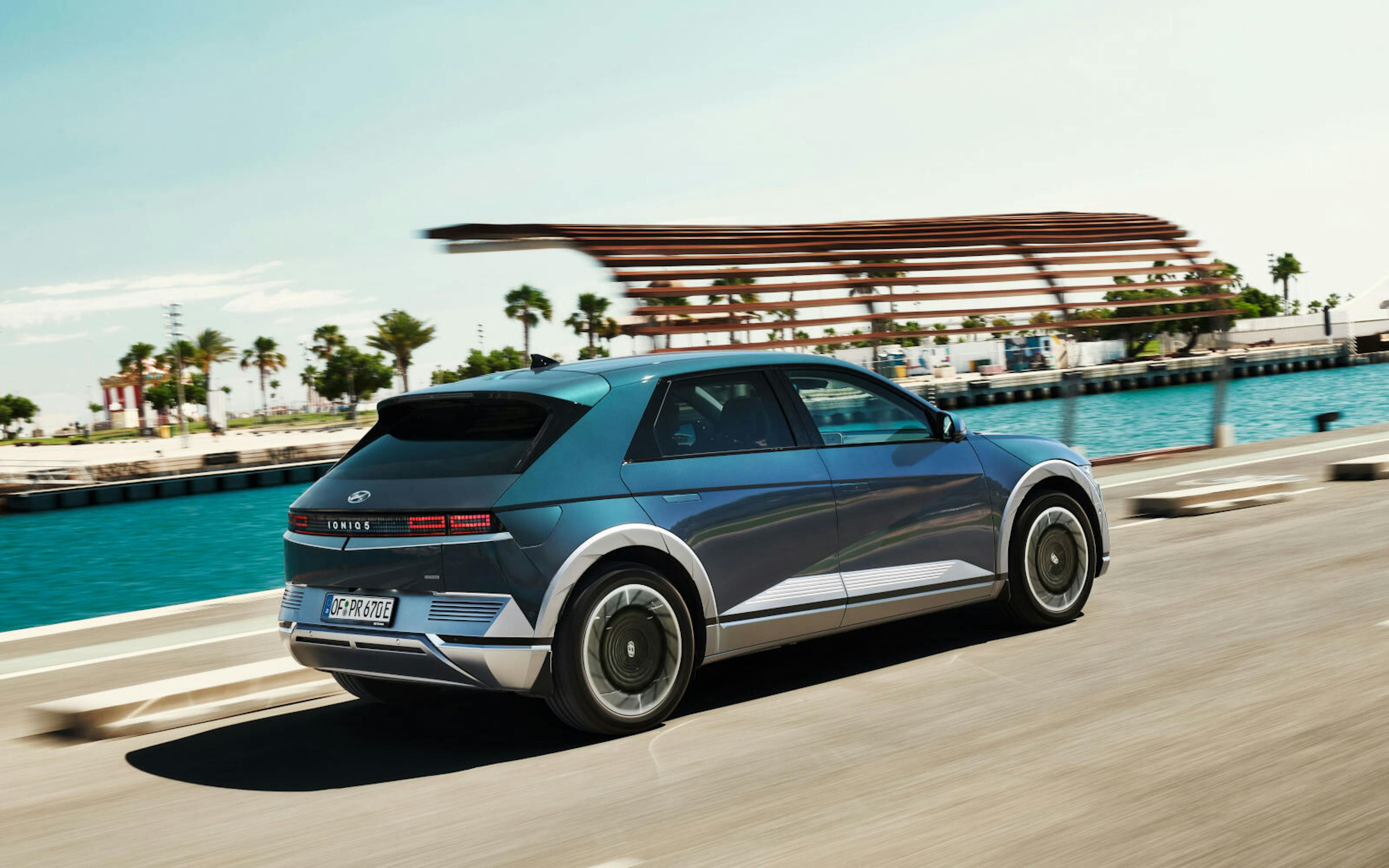
- The Hyundai Ioniq 5 is much more affordable than the electric luxury sedan, charging at up to 240 kW and thus absorbing energy for 100 kilometers within five minutes.
But that's not the end of the story. The carmakers and some start-ups are currently working on several new battery technologies. The solid-state battery, which is scheduled to go into series production in a few years, not only does not require critical raw materials such as cobalt, but isalso more angular and has a significantly higher energy density. This has a positive effect on the range.
E-cars stay technically up to date for longer
Software for cars will make the difference in the future – these SDVs (Software Defined Vehicles) have the potential to revolutionize the owner's user experience as well as the entire automotive industry. Over-the-air (OTA) updates, similar to smartphones, keep operating systems up to date even years after they have been delivered. This can affect not only the infotainment system and assistance systems, but also battery management and power electronics.
Tesla has given its sporty Model S Plaid and the performance variants of Model 3 and Model Y, for example, an optional track mode via OTA update. This changes the feel of the brakes as well as the traction and stability control. In the Model S Plaid, the top speed has also increased by 20 km/h. With the help of OTA updates, handling and performance can be improved afterwards. More importantly, however, it can make vehicles safer, more efficient and have a longer range, and in many cases even free of charge.
However, the "Software-Defined Vehicle" is also revolutionizing the business model of car manufacturers. In the future, they will earn their money not only by selling and leasing new cars and maintaining them, but also by providing certain features at a later date. The best example of this is the all-wheel steering of the Mercedes EQS. The rear wheels turn at an angle of 4.5 degrees ex works. If you want a steering angle of 10 degrees for even better maneuverability, you can book this upgrade for 489 euros per year. There are no limits to the imagination of the manufacturers when it comes to offers of this kind. Especially if autonomous driving becomes established, the digital subscription models for electric cars will become even more important.
Compact electric units enable innovative body shapes
Since electric motors are much more compact than combustion engines, the electric drive offers car designers new possibilities. Based on the so-called skateboard platforms, in which the battery is placed centrally between the axles, they can create innovative and emphatically futuristic body shapes – for example in terms of aerodynamics.
No wonder that the three production cars with the lowest drag coefficient (Cd value) are all electric. First place goes to the Dutch solar car Lightyear One (0.175), whose production was already discontinued after a few units. The Lucid Air Pure (0.197) and the Mercedes EQS (0.20) follow on the podium.
The space also benefits from the electric drive. Under the bonnet of many electric cars, instead of the engine, there is the so-called frunk, an additional trunk. In addition, the wheelbase can be stretched, while the overhangs are emphatically short.
The VW ID.3 shows the typical design of an electric compact car. The A-pillar starts far forward due to the short snout, which maximises the space available in the interior. The omission of the center tunnel reinforces this effect. The compact VW ID.3 offers passengers a similar amount of space as a much larger Passat.
E-cars also offer great visual tuning potential
Admittedly, car fans still have to get used to the futuristic lines of many electric cars. But as in the old car world, there is now also a useful range of tuning parts for electric models. For the Tesla Model 3, for example, entire body kits are available, some of which even represent an aerodynamic improvement. Interestingly, KW's Model 3 coilover suspension including lowering is one of the most successful products of the suspension specialists. It is not only intended to improve handling, but also to smooth out the harsh driving comfort of the standard suspension.
Some manufacturers see the future of their industry in add-on and tuning parts for electric cars and are increasingly addressing the topic. Prior Design has even announced a widebody kit for Volkswagen's ID. Buzz electric Bulli.
Only engine tuning is massively complicated by the type of drive. Self-screwing is almost impossible for the layman with e-cars and sometimes dangerous. Chip tuning is also not an option for many models, because the performance increase could be nullified with the next over-the-air update. But you can't complain about too little power with most electric cars anyway.
The electric car has prevailed in the battle for the drive type of the future. The serious disadvantages compared to the combustion engine are gradually being eliminated by rapid technical progress. But the most efficient way to power a car is already opening up completely new possibilities for manufacturers and drivers.
source : 10 Arguments for an E-Car That Will Convince Even Petrolheads